
After overlanding across Tanzania for a total of 44 days from the border of Malawi to the very North, I will share everything you need to know about crossing borders, the routes we took, road conditions, police stops, where to stay, national parks to visit, safaris, hiking and everything in between.
This post may contain affiliate links, which means I’ll receive a commision if you purchase through my link, at no extra cost to you.

Overlanding Africa is an adventure of a lifetime that not many people get the opportunity to experience. When people think of taking on countries as wild and remote as the ones across the African continent, it can feel overwhelming and honestly be quite challenging to fully understand the extent of what such a travel experience entails.
When you choose to overland, you are not relying on tours or guides or anyone else to get you to where you need to be. You are relying on yourself, your skills, your navigation and your willingness to make it all happen. You are depending on your own research and knowledge of where to go, where to stay, all of the paperwork and preparation. And you are dealing with unexpected curve balls along the way too – you need to be adaptable and take the journey as it comes. Because the journey of overlanding is what it’s all about.
After overlanding all the way from Cape Town, South Africa, through 10 different countries and 13 countries total, over 9 months, and Tanzania being one of the countries I spent the most amount of time in, I want to share our complete itinerary with you. Including where we stayed, the routes we took from one destination to the next, our activities and safaris with honest reviews, border crossing information and paperwork, travel resources and all the things in between. Let’s get into it…
- OUR TANZANIA OVERLANDING JOURNEY
- 30-DAY OVERLANDING TANZANIA ITINERARY: WITH ACCOMMODATIONS, ACTIVITIES, ROAD NAMES & ROAD CONDITIONS
- HOW ARE THE POLICE STOPS IN TANZANIA?
- CROSSING THE BORDER FROM MALAWI
- CROSSING THE BORDER INTO KENYA
- CROSSING THE BORDER FROM UGANDA
- WHAT IS IT LIKE DRIVING ACROSS TANZANIA: VIEWS, PEOPLE, SAFETY
- FUEL AVAILABILITY AND QUALITY IN TANZANIA
- TANZANIA NATIONAL PARKS & DESTINATIONS WE VISITED
- WILDLIFE WE SAW IN TANZANIA
- STOCK UP ON SUPPLIES IN MAJOR CITIES
- GETTING A SIM CARD IN TANZANIA (OR AN E-SIM)
- TRAVEL INSURANCE
- HELPFUL TRAVEL RESOURCES FOR OVERLANDING TANZANIA
- OVERLANDING TANZANIA IS THE ADVENTURE OF A LIFETIME…
- FREQUENTLY ASKED QUESTIONS:
- YOU MAY ALSO LIKE:
OUR TANZANIA OVERLANDING JOURNEY

Our overlanding journey across Tanzania started at the border of Malawi and continued for 44 days through the country’s most insanely beautiful landscapes, iconic destinations and unforgettable villages.
To say that our experience in Tanzania was life changing is not even an exaggeration. We experienced a sense of the wild here unlike anything we had ever experienced before. With patience and a great sense of wander, nature gifted us untamed encounters with wildlife, mountain views and sunsets that would take anyone’s breath away and connections with the local people and our guides that warmed our hearts – connections that we have continued to nurture ever since and will always come back to throughout our travel life.
The majority of our overlanding journey in Tanzania was so smooth. We got from place to place with ease, never ran out of fuel (winning), always had what we needed, didn’t pay any bribes and thoroughly LOVED our experience in every single place we visited. We only had an issue with our car on the way back down Tanzania towards Malawi where our automatic transmission started to overheat but that’s a story for another time… and it had nothing to do with Tanzania itself!
If you are looking to overland a country that is just the most wonderful blend of picturesque landscapes, abundant wildlife, rich culture and once in a lifetime adventures, then Tanzania is your place!
30-DAY OVERLANDING TANZANIA ITINERARY: WITH ACCOMMODATIONS, ACTIVITIES, ROAD NAMES & ROAD CONDITIONS

We overlanded Tanzania for 44 days, but I will be condensing our trip into a convenient 30 day itinerary for you. We spent extra days in some destinations and also had quite a few rest days in between which is not necessary for you to have on your itinerary. Our journey started from the south of Tanzania at the border of Malawi. We also crossed the border through Kenya and Uganda which I will share more about below. We also did shorter drives per day than most people usually do because we drive slower and usually the drives are longer than it says on GoogleMaps because of the road conditions and trucks. You could do 2 days of our driving in one day if you so wish.
DAY 1:
Cross the Kasumulu Border to Chimala via the B345 until you reach the intersection by Uyole, you turn right onto the A104 that takes you to Chimala.
Road condition: Really good paved roads most of the way. Only just outside of Chimala the road became uneven and there are plentiful trucks on this road.
Stay: We stayed at a homestay we found on Airbnb but unfortunately it doesn’t show up anymore. Mbeya is the nearest big city with options on Booking.com.
DAY 2: Chimala to Iringa via the A104 all the way.
Road condition: Many trucks to pass on this road, we left at the crack of dawn to try beat the peak of trucks moving on this highway. The road is uneven for about an hour when we leave Chimala. And then it is good paved roads to Iringa.
Stay: Hidden Valley Backpackers.
DAY 3: Iringa to Dodoma via the A104.
Road condition: Good paved roads.
Stay: Goldarispa Home Apartments.
DAY 4: Dadoma to Mto Wa Mbu via the A104 until you reach the intersection by Makayuni. Turn left at the intersection onto the B144 to reach Mto Wa Mbu.
Road condition: Good paved road. There is an uneven stretch of road for about an hour before the intersection that you should drive slowly on because the bumps in the road are a bit deceiving and can make your car wobble if you driving too fast.
Stay: Fig Tree Lodge Camp.
DAY 5: Mto Wa Mb to Lake Natron via Natron Road.
Road condition: It is dirt road all the way to Lake Natron. If you go in dry season like we did, the road is very doable all way through. It is extremely dusty. You will pass a short section that has a lot of volcanic rocks but it is okay to drive over if you just drive slowly. If there has been any heavy rain you might have to do river crossings and muddy patches but this was not the case for us in dry season. There are sections with corrugations but nothing too bad for a 4×4 to handle.
Stay: World View Camp Site.
DAY 6: Spend the day exploring Lake Natron down by the lake and the village. We spent a lot of time with the local villagers and artisans by the lake.
DAY 7: Waterfall hike at Lake Natron and enjoying the views from World View Camp Site.
DAY 8: Drive from Lake Natron to Arusha via the Natron Road and then turning left onto the B144 at Mto Wa Mbu until you reach the Makuyuni intersection where you will turn onto the A104 towards Arusha.
Road condition: Good paved road. There can be a lot of traffic on this road with trucks and safari vehicles.
Stay: Summit Safari Lodge.
DAY 9: Drive from Arusha to Lushoto via the A23 until you reach Uchira. Just after Uchira you will turn right onto the B1 until you reach the village of Mombo. You will turn left onto the main road that goes through Mombo village and continue all the way up through the mountains to reach Lushoto and then continue to Irente View Cliff Lodge. There were 2 different roads from Lushoto to the lodge when we were there. The best thing to do is to get to Lushoto and then ask the local people in the village which road is open and clear to the lodge because one road was impassable because of the mud and the other was open at the time.
Road condition: Good paved roads until Mombo. From Mombo to Lushoto is uphill but the road is well taken care of. There are just quite a few busses passing on this mountain pass and the road can become narrower at times (but not too narrow that it is unsafe, it is a safe road). So you just need to drive carefully ad hoot around the corners so that any oncoming vehicles are aware you are turning the corner. The road from Lushoto to the lodge was pretty terrible for us at the time. It was very muddy and there was one water and mud crossing that felt a bit overwhelming to cross. But we still made it safely. It may or may not be like that for you depending on if it rained in the recent days.
Stay: Irente View Cliff Lodge.
We spent the sunset at the Irente view point. It is a must-see, the mountain view from here is spectacular and can be accessed right from the lodge.
DAY 10: Woke up early to start our 3-day Usumbara Trek through the Usumbara Mountains.
The first village we trekked to was Lokozi.
Stay: Bush Baby Homestay and Camp Site.
DAY 11: Hiked from Lokozi to Rangwi Village.
Stay: Rangwi Sisters Guest House.
DAY 12: We hiked from Rangwi to Mambo Village.
Stay: Uvi House & Restaurant. The main view point in Mambo village is accessed through the Mambo View Point Eco Lodge. You can also stay here, it is so beautiful and another must-see view point on the Usumbara trek.
DAY 13: We arranged a taxi from Mambo back to Irente View Cliff Lodge to sleep there for one more night.
DAY 14: Drive back from Lushoto to Moshi via the same route we took to get there.
Stay: The Loft @RAU.
DAY 15: Drive from Moshi to Arusha via the A23.
Road condition: Good paved road, just a lot of traffic along the way.
Stay: Summit Safari Lodge.
We met with our guides for Kilimanjaro.
DAY 16: Spent one day in Arusha preparing snacks and our gear for our Kilimanjaro trek with Climb Kili.
DAY 17: The start of our 5N/6D Kilimanjaro Trek! Machame Camp site.
We left our car at the Summit Lodge. It is very safe to leave your vehicle there and there are 24/7 guards.
DAY 18: Kilimanjaro Trek. Shira Camp site.
DAY 19: Kilimanjaro Trek. Barranco Camp site.
DAY 20: Kilimanjaro Trek. Base Camp.
DAY 21: Kilimanjaro Trek. Summit day! Mweka Camp site.
DAY 22: Last day on the Kilimanjaro Trek.
Went back to Arusha to sleep in Summit Safari Lodge again.
DAY 23: Spent the day resting in Arusha.
DAY 24: Another day in Arusha getting ready for our Serengeti tour with Climb Kili.
Our car stayed at the Summit Lodge again while we went on our tour.
DAY 25: First day of our Serengeti Safari experience.
Our guide drove us from Arusha to Kilima Valley Tented Camp in the Serengeti National Park. This was our base for all 3 nights.
DAY 26: Full day safari within the Serengeti National Park. From sunrise to sunset we were out exploring the park.
DAY 27: Witnessing The Great Migration day.
DAY 28: Ngorongoro Crater safari day and driving back to Arusha.
Stayed over in the Summit Safari Lodge again.
DAY 29: Drive from Arusha to Moshi via the A23 again.
Stay: The Loft @RAU.
DAY 30: Drive from Moshi to the Rongai border via the A23.
Road condition: Good paved road.
Crossed the border into Kenya to Oloitoktok.
HOW ARE THE POLICE STOPS IN TANZANIA?

The number one rule in Tanzania is to always follow the speed limit. We didn’t really experience so many police stops on our journey until after Dodoma. Once we left Dodoma we noticed that traffic cops like to stand at the entrance and exit of villages and small towns to catch people driving over the 50km speed limit. If you are caught, you usually a pay a fine equivalent to around 12-15 USD. It is best to stick to the 50km speed limit within village/town areas to avoid any unwanted police interaction.
With that being said, we had 2 instances where a traffic cop tried to scam us into thinking we had gone over the limit to get money from us. But we did in fact not exceed the speed limit. One cop could not show any proof that we went over 50km (they usually have one of those handheld speed guns to show you proof). And the other cop threatened to take us to the police station if we didn’t pay him so we called his bluff and told him he can take us there. He ended up letting us go.
Besides those 2 instances, the police in Tanzania were really kind and didn’t bother us in any way. As long as you have your paperwork in order at all times then you are good to go. They will ask you for routine checks like visas, driver’s license, your receipt for paying the road tax and insurance at the border when you entered. You might also be asked to show that you have the necessary equipment in your vehicle such as a fire extinguisher, road cones, reflector jackets and the necessary stickers on your car. We never got asked for this but it is a requirement so it is best to just have this in your car anyway.
CROSSING THE BORDER FROM MALAWI

We crossed into Tanzania from Malawi via the Kasumulu one-stop border. It was a simple and straight forward process with no issues. I am South African so I didn’t need a visa for Tanzania. My partner is Canadian and obtained an e-visa beforehand so he didn’t have to do the whole visa process at the border to save time. But you do have the option of obtaining a visa on arrival.
For your entry you need your passport, yellow fever vaccine and proof of onward travel (we never got asked this at any border). Some border agents might ask you where your first stay is, so just have an accommodation ready in case.
For you car entry you need:
- Carnet De Passages – this is like your car’s passport that the agents will fill in and check upon exiting the country again. You obtain this from your home country before leaving on your trip.
- Your driver’s license.
- Original registration and license papers.
- You will pay a one-time road tax fee.
- A Temporary Import Permit fee (TIP).
- You are also required to get insurance for your car at the border from an insurance agent. They do it there for you on the spot and give you a sticker for the window so that traffic cops can see it at checkpoints.
- Please note that if you are still financing your car, you might be required to have proof of ownership and financing from the bank.
CROSSING THE BORDER INTO KENYA

This was by far the quickest and easiest border on our whole trip. Maybe it is because there was quite literally no one else crossing the border at the same time as us but the agents were so efficient and checked all of our documents super quickly.
You need all of the same documents and payments as I mentioned above. With an added payment for the Kenya Electronic Travel Authorization which is $30 – this is a required payment for all travelers unless you are from one of the African nations.
CROSSING THE BORDER FROM UGANDA

We also have experience crossing the border from Uganda into Tanzania via the Mutukula border. This was an easy border and you need to show all of the same documents as I mentioned above when crossing into Tanzania from Malawi.
Uganda border agents seemed more strict at other land borders where they would X-ray your car and search your bags. But they didn’t do that at this border crossing. Be sure to have your TIP and the slip from your Carnet De Passage ready when exiting Uganda.
WHAT IS IT LIKE DRIVING ACROSS TANZANIA: VIEWS, PEOPLE, SAFETY

When you overland Tanzania, especially when you are crossing the entire country, you get to experience this land in its entirety. You are not only visiting the main tourist destinations. You are passing through authentic and remote villages, crossing mountain passes abundant in banana trees and farming plantations that turn into dusty desert-like sceneries with thousands of baobabs scattered across the view.
Compared to other African countries, the roads in Tanzania are good – at least the ones we took on our itinerary. This also makes the drives so much more enjoyable because your journey is so much smoother.
The people are WONDERFUL! There was not a single moment in Tanzania that we did not feel welcomed by the people. Between the local people we met on our journey, our accommodation hosts and our guides, we really had a great time with everyone.
We also felt safe at all times. There wasn’t a threat of any kind in our experience. And we could always leave our car safely in secured parkings when it was necessary to do so.
FUEL AVAILABILITY AND QUALITY IN TANZANIA

The only fuel station that we trusted to use in Tanzania was Puma. Our 4×4 was a diesel car and it only took a specific 50ppm diesel. The only petrol station in Tanzania that could confirm they were selling low sulphur diesel was Puma. Any other stations we asked could not definitively confirm which diesel they use so we didn’t want to take the risk. Thankfully there were enough Puma stations along our route to continue filling up every time we passed by one. And when we saw that there wasn’t one on route we made sure to keep our jerry cans filled incase of emergencies.
From all of the research we did and all of the questions we asked at fuel stations, I would avoid filling your vehicle at random stations. You will see so many en route with many different names and from what we read was that the petrol and diesel is not always high quality and can sometimes be dirty which damages your engine.
The safest option is to fill up at reputable stations, like Puma, Engen, Total Energies and Oryx. Between these filling stations, you will be able to fill up your tank sufficiently along the way without any problems.
TANZANIA NATIONAL PARKS & DESTINATIONS WE VISITED

There is an abundance of national parks and nature destinations in Tanzania and I honestly feel like you can’t go wrong with visiting any of them. But of course, there are the iconic bucket-list destinations that should be at the top of your priority list. They are so worth experiencing and each one is so unique in its landscapes, wildlife and activities.
These are the ones we visited and would honestly visit all over again:
LAKE NATRON

Lake Natron is a nature destination that I feel not many tourists visit. It is known as the “lake that turns animals to stone” because of its high pH content that calcifies dead animals into pretty remarkable stone-like figures. Lake Natron is also situated in the heart of the Maasai people, surrounded by 2 volcanoes: Ol Doinyo Lengai (the mountain of the Gods) and Gelai. You can also see wildlife here such as wildebeest, zebras, giraffes, antelope and amazing bird life.
I have a complete guide to exploring Lake Natron that you can read here. I share everything you need to know about exploring this breathtakingly beautiful destination.
USUMBARA

The Usumbara trek is a multi-day trek through the lush green Usumbara Mountains. If you are looking for something completely different to the typical Tanzania itinerary then visiting the Usumbara mountains is a must. It takes you through cloud forests, little mountain villages surrounded by farmlands, tea plantations and rolling hills. You stay in villages along the way so you do not need to bring your own camping gear or food. You also have the opportunity to see chameleons (if you spot them!) and monkeys.
This trek was very different to any trek we have done in that we found it to be more of a cultural experience than a dramatic landscape trek. Although the first day in Irente has the most insane view and the last day at Mambo View Point has an insane view too. We made friends with all of the children along the way which was so sweet, they would even hike with us through their whole village and wave us goodbye as we left. It was a special experience for us because we got to see a whole different side to Tanzania and its culture.
KILIMANJARO

Mount Kilimanjaro, the highest peak in Africa! Summiting Kilimanjaro was honestly so much more amazing than I thought it was going to be. You climb through 4 different landscapes/zones to reach the summit, each one so different and unique that it feels like you’re on a whole different mountain every day. Reaching the top is not only such an accomplishment but the whole trek is so much fun.
You can read all about summiting Mount Kilimanjaro via the Machame Route on my blog here.
SERENGETI (AND THE GREAT MIGRATION)

The Serengeti National Park far exceeded our expectations of what we would experience here. The amount of wildlife we saw was just unbelievable. In other national parks we had visited before coming to the Serengeti, we felt lucky to see even one of the big cats in a day (which we were), but in the Serengeti we saw an abundance of lions and leopards and even a cheetah and her cub.
You are witnessing wildlife in the wild against stunning backdrops. The Serengeti scenery is so beautiful and you are honestly in awe by the end of each day. Nature is nature and seeing wildlife isn’t always guaranteed. But with a few days of exploring and being patient, the Serengeti will gift you with some amazing encounters that you will never forget.
If you are here during the dry season, you will be able to witness the Great Migration. It is a true spectacle of nature that you can only really fully understand when you see it with your own eyes.
I have written an in depth guide on how to visit the Serengeti and witness the Great Migration here: ETHICAL SERENGETI SAFARI ITINERARY & GUIDE TO THE GREAT MIGRATION. I also share information of visiting the Ngorongoro Crater in that blog post…
NGORONGORO CRATER

While you are visiting the Serengeti National Park, you can also visit the Ngorongoro Crater. You are literally going on a safari in a volcanic crater filled with wildlife. The area of the crater is much smaller than the Serengeti so animals tend to form in larger groups in the grasslands and around the lake. Although, overall we did see more in the Serengeti, safariing inside of a truly beautiful landscape within a volcanic crater is such a unique experience.
WILDLIFE WE SAW IN TANZANIA

In every country we visited on the Africa trip, we wrote down (to the best of our ability) every single WILD species we saw. And guess how many we saw in Tanzania?? 85!!! 85 wild species of mammals, reptiles and birds. And these are just all of the ones that we could recognize and write down – there are certainly a few bird species that we missed along the way:
- Panda Crows
- Guinea Fowl
- Yellow-Breasted Sunbird
- Olive Baboons
- Red-Billed Hornbills
- Vervet Monkeys
- Superb Starlings
- Zebras
- Wildebeest
- Secretary Birds
- Masai Giraffes
- Swallow-tailed Bee Eaters
- African Grey Hornbill
- Hadida’s
- Kori Bustards
- White Igrits
- Lesser Flamingos
- Ring Necked Dove
- African Grant Gazelle
- Great White Pelicans
- Squirrel
- Speckled Mousebird
- Swallows
- Pale Chanting Goshawk
- Black & White Colobus Monkeys
- Blue Monkeys
- Two-Horned Chameleon
- Silvery-Cheeked Hornbill
- Grey Go Away Bird
- White Necked Raven
- Moorland Chat
- Four Striped Grey Mouse
- Mouse
- Pied Kingfisher
- Purple Grenadier bird
- Black Backed Jackals
- Waterbuck
- Slender Mongoose
- Martial Eagle
- Auger Buzzard
- Greater Flamingo
- African Sacred Ibis
- Burrowing Skink
- Dwarf Mongoose
- Long Toed Lapwing
- Marabou Stork
- Lilac Breasted Roller
- Yellow Billed Black Kite
- Long Crested Eagle
- Blue Herron
- Ankole-Watusi Cattle
- Mzungu Pigeons
- Hammerkop
- Ostriches
- Red Headed Vulture
- Tawny Eagle
- Hippos
- Lions
- Hyenas
- Thompsons Gazelles
- Warthogs
- Hartebeest
- Cheetahs
- Saddle Billed Stork
- Black Headed Heron
- Egyptian Geese
- Crocodile
- Impalas
- Black Crake Bird
- Yellow Billed Stork
- African Fish Eagle
- Buffalo Weaver
- Dik-Diks
- Elands
- Leopard
- Buffalo
- Goshawk
- Lovebirds
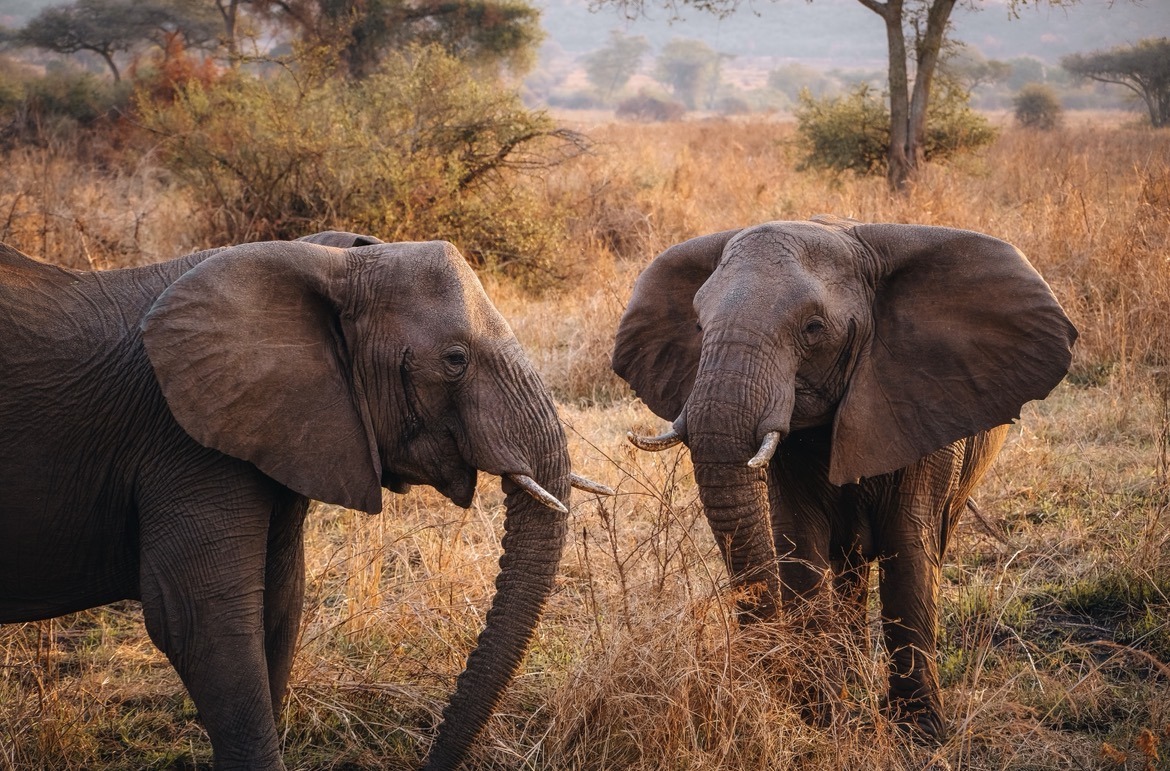
- Elephants
- Dassies
- Oxpeckers
- Grey Crowned Cranes
- Cormorants
- Blacksmith Lapwing
- Black Winged Stilt
- Rufous Weaver
- Typical Weaver
STOCK UP ON SUPPLIES IN MAJOR CITIES

On our overlanding Tanzania travel itinerary, we stopped over in 4 different major cities: Iringa, Dodoma, Arusha and Moshi. All of these stop overs were a great opportunity for us to stock up on any necessary supplies we needed. You can find bigger supermarkets in these places, as well as anything you might need for your vehicle from auto shops/mechanics. For example, in Arusha we were able to find new fuel and oil filters for Larry (our car), as well as stock up on oil and coolant for our drive back down to South Africa.
The contact we used in Arusha to help us find car parts: Lewi Automotive Parts Arusha, +255 762 226 990.
He was extremely helpful and got us all the parts we needed for our Mitsubishi (and finding parts for a Mitsubishi in these countries is not always the easiest).
Even though there are supermarkets in these cities, I always encourage travelers to buy as much as they can from local markets and farmers. Tanzania is one of the countries that have quite an abundance of fruits and vegetables grown by local farmers (their avocados are perfection!). And it is always better to support the local people by buying straight from them as it helps the community and their families directly. We bought all of our honey, delicious fruits and vegetables from food stands in the cities and along the roads that go through farming villages – there are plenty of these en route!
Even though you will find smaller tuck shops and limited grocery shops along your route, if you are visiting remote areas for a few days and you plan to cook your own food then it is better to prepare beforehand.
PRO-TIP: Have some extra snacks, fruits, water or soft drinks in the car with you. Between police men and women, traffic cops, children, road side workers who are out in the heat all day, or if you just want to make friends along the way, having some extra supplies in your car never hurts. Especially at police stops, they like to ask for soft drinks and snacks!
It is also always best to fill up your fuel tank and buy engine oil from the main cities or larger towns that you pass through. The quality is better and more trustworthy. A lot of the mechanic shops and fuel stations in smaller towns and villages sell low quality oil and fuel which damages your engine and you really don’t want to have to deal with that on your trip.
At the end of our trip in Tanzania, before we crossed back into Malawi, we had the issue of finding the correct automatic transmission oil for Larry. And when we did find the “correct” brand, the mechanic was honest enough to tell us that the oil in the bottle is in fact not what is written on the label. This could have completely ruined our trip if we had put this oil into our transmission. So it is best to ensure the quality of any oil or fuel you buy for your car by purchasing from reputable filling stations and mechanics.
GETTING A SIM CARD IN TANZANIA (OR AN E-SIM)

Having reception in every country we visit is a necessity for us. We got a physical SIM card in the town of Kasumulu when we crossed the border from Malawi into Tanzania. Giving the exact location of the shop we purchased from is nearly impossible. But all we did was ask someone at the border where we can buy and register a new SIM card and they pointed us in the right direction.
We got a Vodacom SIM card and it worked pretty well throughout the whole country. Of course in remote places it can be more difficult to get a signal. But many places have Wi-Fi, even in places like Lake Natron. The Wi-Fi can also be spotty and intermittent but between having the SIM and using available Wi-Fi’s we managed all throughout Tanzania. It was also easy to top up with data along the way as there are Vodacom kiosks throughout the towns that you pass through. It costs about $12 for 10GB of data for 30 days. You just need to show them your passport and valid visa stamp to obtain the SIM.
If you prefer to not go through the hassle of getting a physical SIM, you can easily sign up for an eSIM. I highly recommend using either:
Both of them offer eSIM plans for Tanzania and you can top up with data as you go straight from their apps.
TRAVEL INSURANCE

Having a good travel insurance for overlanding Tanzania is a must. You are most likely to be safe throughout your whole trip but there are variables when traveling in Africa that could happen and having travel insurance could save you from thousands of dollars in costs.
I used SafetyWing throughout my entire Africa journey. They have really great coverage plans for while you are outside your home country. They have extensive medical and travel related insurance for a range of possible situations. As well as extra add-ons such as coverage for adventure sports and theft.
This is a quick helpful calculator to see how much their Nomad Essential Insurance would cost:
You can also upgrade to their Complete Plan.
HELPFUL TRAVEL RESOURCES FOR OVERLANDING TANZANIA

ROAD CONDITIONS: Our number one travel resource for overlanding Tanzania (and all of the countries we visited) was Tracks4Africa. Their maps show what the conditions of all the roads are. You can get an idea of whether you are on paved roads, dirt roads, corrugated or roads with potholes. There were a few instances where the information wasn’t 100% accurate but it was right most of the time. Whenever we had any doubts about a road or a route we were taking, we would contact our camp site or guest house owner to ask them any questions we had.
MAPS: We used the off-line maps feature on Google Maps for in case of emergencies if we didn’t have reception en route. We downloaded each section of the map of where we were going so we always had a way to correctly navigate to our destination.
VISA: This immigrations guidelines website is useful for checking whether you need to obtain a visa for Tanzania. Most countries are eligible for a visa on arrival or you can obtain an e-visa before arriving. My partner did the e-visa application which made entering at the land border so much faster. We didn’t have to wait in any extra queues or deal with any hassles. I highly recommend doing the e-visa through this official portal to make your life easier.
OVERLANDING TANZANIA IS THE ADVENTURE OF A LIFETIME…

Tanzania is an absolute dream! And as much as you can tick off bucket-list experiences here, there is no doubt that this country is going to surprise you with many amazing and unexpected experiences along the journey – they are the dreams come true that you never thought you had.
Overlanding Tanzania will be one of the most unique travel experiences you’ve had and I hope that this post has helped you to feel more prepared for the adventure ahead. And not only prepared but excited and ready to embrace the wilderness that is Tanzania.
Feel free to ask me any questions about overlanding Tanzania in the comments below. I would be happy to help make planning your trip there easier. I would also love to hear about your experience and what you love most about Tanzania!
Hakuna Matata!

FREQUENTLY ASKED QUESTIONS:
IS OVERLANDING TANZANIA SAFE?
Yes, overlanding Tanzania is safe overall. As with overlanding any country, it is best to know your routes beforehand to navigate the country with confidence. You always need to look out for wildlife and any bumpy/pothole roads to avoid unwanted accidents. There are a lot of truck drivers on the main roads and they do not always drive with caution, so keep your awareness at all times. In some areas of Tanzania there is petty crime and the police may try to bribe you. You just need to stay alert and don’t leave any valuables in your car. In our experience, we didn’t experience even a moment of danger at all in Tanzania. Everyone’s experience is different but we really felt safe everywhere we went and on the roads.
CAN YOU OVERLAND TANZANIA WITHOUT A 4X4?
To truly overland and reach the tourist destinations in Tanzania, yes. A reliable, high clearance 4×4 is the best way to successfully overland the country. Between the major cities and bigger towns, the roads are mostly paved. But when you start to venture into the national parks and protected areas, the roads are rougher. Especially in the Serengeti. We even saw many Land Rover safari vehicles broken down on those roads because of how rough they are. The corrugated roads are also challenging if you do not have a 4×4. Your suspension needs to be able to handle the bumps, the potholes, the mud, sand, and potential river crossings.
WHAT IS THE BEST TIME TO VISIT TANZANIA?
The best time to visit Tanzania is from June to October. These are the driest months. It makes overlanding easier as there are less river crossings and muddy terrain. You will also be able to spot wildlife easier because the bush is less dense and animals gather around watering holes. There is a shorter dry season from January to February that is also good for visiting.
DO I NEED A YELLOW FEVER VACCINE?
You only need a yellow fever vaccine if you are flying or entering Tanzania from a country with a high-risk of yellow fever. This includes if you transited through a country on the high-risk list for more than 12 hours. The vaccine needs to have been done minimum 10 days before your arrival in Tanzania. If you flew from a country without a high risk, you do not need one.
DO I NEED TO WORRY ABOUT MALARIA?
Yes, there is a high-risk of Malaria in most of Tanzania. The risk is higher in the wet season but you still need to be cautious in the dry season, especially in the lower altitudes areas. There is no vaccine for Malaria. You can take the anti-malarial medication prescribed to you by your doctor before you arrive in Tanzania. If you prefer to not take the medication, you can ensure you are covering up your skin and always use a good mosquito repellant – especially during the sunrise and sunset hours.


YOU MAY ALSO LIKE:
- THE ULTIMATE TANZANIA OVERLANDING ITINERARY: FROM SOUTH TO NORTH
- LAKE NATRON: A COMPLETE GUIDE TO VISITING TANZANIA’S MOST UNREAL NATURE DESTINATION
- ETHICAL SERENGETI SAFARI ITINERARY & GUIDE TO THE GREAT MIGRATION
- SUMMITING MOUNT KILIMANJARO, MACHAME ROUTE: EVERYTHING YOU NEED TO KNOW FOR AN EPIC EXPERIENCE UP AFRICA’S HIGHEST MOUNTAIN



Leave a Reply